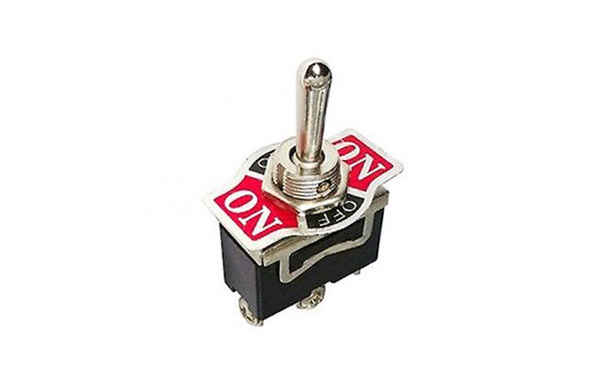
A DPST switch is a type of switch with two independent but synchronously operating “poles” (control terminals). Each pole connects to two “throws” (connection terminals), but each pole can only connect to one throw at a time, similar to two parallel SPST (Single Pole Single Throw) switches. Each terminal can be in either the ON or OFF position. The key feature of a DPST switch is its ability to simultaneously control the opening and closing states of two circuits, ensuring that the two circuits are always synchronized.
Structure
A DPST switch typically includes:
· Operating Handle: Used by the user to control the switch's state.
· Double Poles: Two independent but synchronously operating contact systems, each functioning like a small SPST switch.
· Four Terminals (Throws): Each pole corresponds to two connection terminals, used for connecting the circuits. The two input terminals connect to the power source or the input side of the circuit, while the two output terminals connect to the load or output side.
Symbol
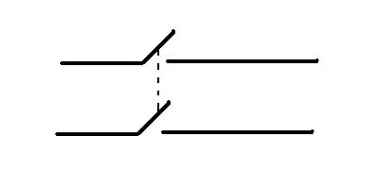
The electrical symbol for a DPST switch is represented by two parallel lines switched together, each line having its own set of input and output connections.
Working Principle
When the operating handle is moved to a certain position, the two poles act simultaneously, each connecting to one of its corresponding terminals. This means that the DPST switch can turn on or off the current in two independent circuits simultaneously, keeping both circuits’ states consistent.
Applications
DPST switches are commonly used for:
· Isolation Purposes: Isolating equipment from the power supply.
· Simultaneous Control: When two circuits need to be controlled simultaneously, such as managing both a live and neutral line.
· Household and Industrial Applications: Used in scenarios requiring dual-circuit switching, such as heater controls, lighting systems, and motor controls.
Examples:
· In household circuits, a DPST switch can be used to control two lamps in a room (e.g., a bedside lamp and a reading lamp), ensuring they are switched on or off simultaneously.
· In certain industrial equipment, a DPST switch may be used to control two related motors or solenoid valves simultaneously, ensuring their operational states are consistent.
· In audio and video equipment, a DPST switch may control multiple signal sources or speakers, ensuring synchronized audio output.
Considerations
· Ensure the connected circuits’ rated voltage and current do not exceed the switch's ratings when using a DPST switch.
· Regularly check the contact condition of the DPST switch to ensure reliable connections and avoid circuit faults due to poor contact.
· When installing or replacing a DPST switch, follow relevant electrical safety regulations to ensure safe operation.
Summary of Key Characteristics
· Double Pole: Controls two separate circuits.
· Single Throw: One position for ON and one for OFF.
· 4 Terminals: Two for each input and output.
· Voltage/Current Ratings: Vary based on the specific application and load.
· Simultaneous Switching: Both circuits are operated together, commonly used for safety and convenience.