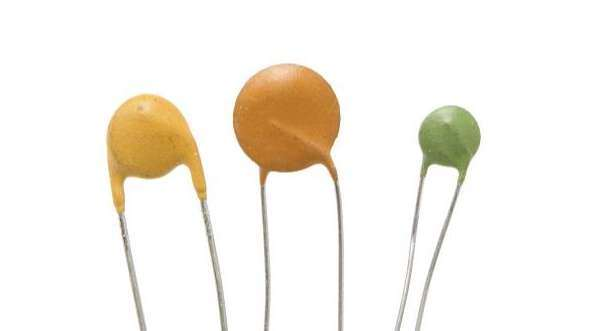
A ceramic capacitor is a type of fixed-value capacitor where the dielectric function is carried out by the ceramic material. Its construction involves a metal layer sandwiched between several alternating ceramic layers and the metal layer serves as an electrode. The most often used type of capacitors in various electrical devices is ceramic capacitors. This is a result of their more affordable and dependable nature.
These capacitors come in a non-polarized form and uses ceramic or porcelain discs. Moreover, the low conductivity of the ceramic substance makes it a great dielectric. Additionally, it effectively supports the electrostatic fields.
Polarity of Ceramic Capacitor
It's critical to realize that one of the most crucial factors to take into account when connecting capacitors in an electric circuit is their polarity. Two groups of capacitors can be distinguished according to their polarity:
Polarized capacitor: Anode and cathode are the terms for the two terminals that appear on a polarized capacitor. When These terminals are taken into account when connecting them in a circuit. On the other hand, a non-polarized capacitor has a terminal and can be used in any manner.
Non-polarized capacitor: Every electrical device usually has a ceramic capacitor, a non-polarity device with a ceramic dielectric material as its dielectric component.
Characteristics of Ceramic capacitors
Ceramic capacitors have several characteristics which include the following:
Precis measurements and accuracy: Ceramic capacitors are primarily utilized in low-loss and high-stability systems. These instruments yield remarkably precise results, and these capacitors' capacitance values remain constant in relation to temperature, frequency, and applied voltage.
Compact size: When compared to traditional capacitors, these devices offer significant advantages when packing requirements call for high component densities. A "0402" multi-layered ceramic capacitor, for instance, has dimensions of roughly 0.4 mm by 0.2 mm.
Dielectric Classes for Ceramic Capacitors: The dielectric classes of ceramic capacitors help in the selection of capacitors according to their intended use.
High voltage and power: During the manufacturing process, Ceramic capacitors, also known as power ceramic capacitors, are made with increased voltage resistance in mind. Compared to PCBs, these capacitors are substantially bigger. Additionally, they feature specialized terminals for connecting high-voltage supplies more safely. Voltages between 2 kV and 100 kV are tolerated by the power ceramic capacitors.
How Are Ceramic Capacitors Measured?
Measurement devices are used to determine the capacitance of ceramic capacitors. The LCR meter is among the best measurement tools. The auto-balancing bridge method is the most widely utilized measurement technique with an LCR meter. Numerous physicists employ this technique with LCR meters.
This method involves adjusting current at a known resistance R and a measured item (=DUT) so that they both come out to be the same. Thus, the voltage would eventually drop to zero. The LCR meter then uses the voltage to determine the impedance. This voltage is applied to a DUT together with a known resistance R.
The characteristics of the four primary types of ceramic capacitors
Semiconductor ceramic capacitors: One trend in the evolution of capacitors is micro miniaturization, which is the process of getting the maximum capacity out of capacitors with the lowest feasible volume.
There are two main approaches to miniaturization for the separation of capacitor components: achieving the thinnest feasible dielectric layer thickness while maintaining the highest possible dielectric material dielectric constant.
Ferroelectric ceramics are among the ceramic materials with the highest dielectric constant; yet, when using ferroelectric ceramics to manufacture standard ferroelectric ceramic capacitors, it is challenging to get the thinnest feasible ceramic dielectric.
Grain boundary layers ceramic capacitors: Fully developed grain surfaces of semiconductor ceramics BaTiO3 are coated with suitable metal oxides (e.g., Tl2O3, CuO or Cu2O, Bi2O3, MnO2, etc.) and treated with heat at the proper temperature under oxidation circumstances. A tiny layer of solid-solution insulation develops on the grain boundaries.
While the internal part of the ceramic grain remains a semiconductor, the whole ceramic body functions as an insulator medium with an apparent dielectric constant of about 2 × 10⁴ to 8 × 10⁴. This insulating layer of thin solid-solution has high resistivity (up to 1012-1013 Ω-cm). Grain boundary layer ceramic capacitors, or BL capacitors, are the capacitors made with this porcelain.
High-voltage Ceramic capacitor: The electronics industry is developing at a rapid pace, making it imperative to produce high-voltage ceramic capacitors with high reliability, small size, low loss, and high breakdown voltage.
The entire ceramic body behaves as an insulator medium with an apparent dielectric constant of about 2 × 10⁴ to 8 × 10⁴, but the interior of the ceramic grain remains a semiconductor. This thin solid-solution insulating layer exhibits high resistivity (up to 1012-1013 Ω-cm). This is used to make what is known as a BL capacitor or grain boundary layer ceramic capacitor.
Multilayer ceramic capacitors: The most popular kind of chip component is the multilayer ceramic capacitor (MLCC), which is the inner electrode material. Ceramic blanks are laminated in parallel with alternating layers and fired into a whole, also referred to as chip monolithic capacitors. These capacitors have high precision, high specific capacitance, and small size, and they can be installed on hybrid integrated circuits and printed circuit boards (PCBs) which increases product reliability. It complies with the IT industry's development direction of being lightweight, multifunctional, high-performing, and miniaturized.
Conclusion
Ceramic capacitors are frequently employed in the production of contemporary electronics. Ceramic capacitors started out as leaded electrical components, but they quickly became surface-mount capacitors as mass-production surface-mount technology took off.
Multilayer ceramic capacitors, which are being manufactured in large quantities, are a useful addition to other capacitor types such as tantalum and electrolytic capacitors, which are typically used for values higher than 1µF.
Frequently Asked Questions
What are the advantages of ceramic capacitors?
The benefits of ceramic capacitors are as follows:
· Ceramic capacitors are reasonably priced
· The ceramic dielectric affects the capacitor's stability.
· There are ceramic capacitors on the market in all shapes and sizes.
Name one drawback of a ceramic capacitor
The inability of the ceramic capacitor to reach the high capacitance values of the polarized type is its main flaw.
What is the ceramic capacitor's capacitance range?
A ceramic capacitor's normal capacitance range is 10 pF to 0.1 μF.
What is the maximum voltage that the ceramic capacitor can handle?
The ceramic capacitor has a rated voltage availability of around 2V and higher.